
The most innovative marketing campaigns 2025 produced share one trait: they turned audiences into participants, not spectators. Duolingo faked its own mascot's death and earned 1.7 billion impressions. CeraVe spent three weeks convincing the internet that actor Michael Cera secretly invented its skincare line, generating a 25% sales lift. Coca-Cola's AI-generated holiday ads, on the other hand, show exactly what happens when that same boldness misreads the room.
Below, I'll walk you through each campaign, the real numbers behind it, and a step-by-step framework you can apply to your own brand.
What Makes a Marketing Campaign "Innovative" in 2025?
Before we jump into examples, let's get one thing straight.
An innovative campaign isn't the one with the biggest production budget or the most celebrity cameos. I used to think it was. I was wrong.
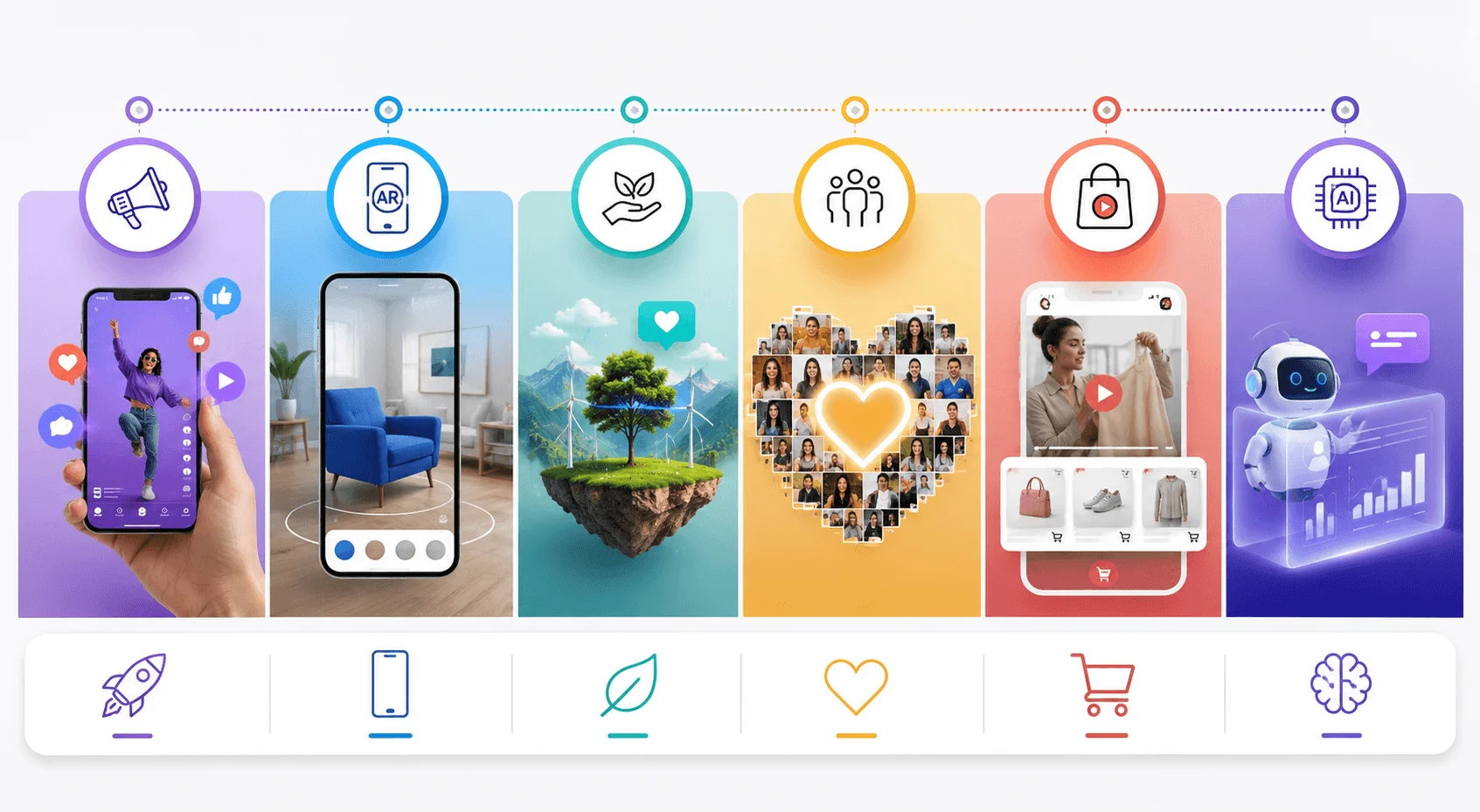
After going through dozens of 2025's breakthrough marketing moments, I noticed something interesting: the winning campaigns all did at least one of these four things really well.
They put the audience inside the campaign, not in front of it. They used data-driven marketing to make people feel individually seen. They tied themselves to a cultural moment in real time. And they let creators — not paid media — carry the distribution.
That's it. That's the whole playbook.
Now let's look at who nailed it.
1. Duolingo's "Death of Duo" — The Riskiest Stunt of the Year
Here's a wild story for you.
In February 2025, Duolingo's social team posted something that looked like a joke gone too far: their owl mascot, Duo, was dead. Tongue out. Eyes replaced with cartoon X's. No warning.
They only planned three posts.
Then the internet lost its mind.
According to Fast Company's inside account, the team saw engagement numbers they'd genuinely never seen before — so they scrapped other campaigns (including a McDonald's Brazil partnership) and built the story out for two full weeks.
The results still blow my mind:
1.7 billion impressions across Duolingo's socials in two weeks
Twice as much conversation around Duo's death as any of that year's top 10 Super Bowl ads
Mentions spiked by roughly 25,560% on announcement day, per Meltwater's data breakdown
The hashtag #ripduo got used more than 45,000 times
Dua Lipa even posted her "condolences." That single post generated 667,000 engagement actions.
Here's the part most people miss, though.
This wasn't just chaos for chaos's sake. As Business Model Analyst points out, the resurrection was tied directly to a product metric — users had to actually complete lessons to bring Duo back. That's the genius move. The stunt wasn't separate from the product. It was the product.
Your takeaway: If you're going to be weird, weld the weirdness to something measurable. Chaos without a mechanism is just noise.
2. CeraVe's "Michael CeraVe" — Turning a Fake Conspiracy Into a Sales Lift
I love this one because it's such a slow burn.
For three weeks leading up to the Super Bowl, CeraVe quietly seeded a rumor: actor Michael Cera secretly invented the skincare brand. Fake paparazzi photos. Influencer "interviews." A whole website, iamcerave.com.
Then, on the biggest advertising stage in the world, dermatologists debunked him live.
Per Ads of the World's Clio Awards case study, the numbers here are honestly staggering:
450 influencers helped it go viral
15.4 billion earned impressions before the reveal even aired
Forbes, Adweek, Ad Age, and GQ all ranked it the #1 Super Bowl campaign that year
A reported 25% sales lift
It also swept the 2025 Clio Awards (Grand, Gold x8, Silver x2) and was named Ad Age's Campaign of the Year.
DAIVID's ad research even ranked it the most effective Super Bowl campaign on TikTok that year.
Why does this matter to you?
Because it proves earned media can outperform the actual TV spot. The Super Bowl commercial was the climax, not the campaign. The real work happened weeks earlier, on channels that cost nothing to post on.
3. Coca-Cola's AI Holiday Ad — A Cautionary Tale (Not a Win)
Not every "innovative" campaign is a good one. And honestly, I think this one belongs on the list because it went sideways.
Coca-Cola doubled down on generative AI for its 2025 holiday ads, this time swapping human characters for animated animals to avoid the uncanny-valley criticism from 2024.
It didn't fully work.
According to Forbes' coverage, the remake used over 70,000 AI-generated clips, refined by roughly five specialists and a team of about 100 people. Polar bears, pandas, sloths, seals — none of them normally associated with a Christmas parade.
Content Grip's analysis noted the technical improvements were real — the truck wheels finally turn correctly — but viewers still described the animation as inconsistent, swinging between cartoonish and eerily lifelike.
Coca-Cola's own VP of generative AI framed it as "a unique collaboration of human creativity and cutting-edge generative AI."
Audiences didn't buy it.
Here's the lesson, and it's an important one: AI in marketing is a tool, not a personality. Coke's Christmas ads carry decades of nostalgic weight. Replacing that warmth with a technically-impressive-but-emotionally-flat visual asks a lot of your audience's goodwill — and 2025 showed that goodwill has limits.
4. Spotify Wrapped 2025 — Data as a Global Celebration
Okay, this one's just fun.
Spotify took its yearly "Wrapped" ritual and turned it into physical, real-world spectacle. Per Pulse Advertising's roundup, the 2025 rollout included 50 fan destinations worldwide — a giant paw installation on Copacabana Beach for Lady Gaga fans, an 800-foot red hair cascade in Union Square for Chappell Roan fans.
It also introduced "Listening Age," a feature comparing your most-played songs' release years against your peer group.
Concurate reports that teenagers discovering they "listen like 70-year-olds" became a meme within hours. A companion feature, "Clubs," sorted listeners into personality types like Archivist or Broadcaster.
Why this works for you to study: Spotify didn't invent new data. They just repackaged existing listening history into something shareable, funny, and personal. That's personalized marketing done right — it doesn't feel like marketing at all.
5. Blinkit × Zomato — Billboards That Talk to Each Other
This is my favorite low-budget example on the list.
Two competing quick-commerce apps in India ran adjacent billboards that "argued" using a famous Bollywood movie line. Blinkit's sign read "Doodh mangoge, doodh denge." Zomato's, right next to it, replied "Kheer mangoge, kheer denge."
That's it. That's the whole campaign.
According to MyHoardings' case breakdown, it snowballed from a simple out-of-home advertising placement into a full viral phenomenon. Other brands — even local police departments — joined in with their own versions.
Blinkit followed it up later in the year with "2025 in a Blink," turning real customer order data into witty, hyperlocal billboard copy.
Your move here: You don't need a huge production budget to go viral. You need a sharp cultural reference and the confidence to let your brand behave like an actual person having a conversation.
6. Nike's "Why Do It?" — Proof That Quiet Can Beat Loud
Nike usually goes big. Fast cuts, adrenaline, a booming voice telling you to just do it.
In September 2025, they flipped the formula.
The "Why Do It?" spot showed athletes like LeBron James in quiet moments of self-doubt, with a calm voiceover asking "Why risk it? Why make it harder? Why dare?" — before pivoting into the reveal: "What if you don't?"
Per Concurate's writeup, the videos crossed 100,000 views within weeks, growing steadily rather than spiking — a pace the brand considered appropriate for a campaign built on subtlety.
Semantic takeaway: Brand storytelling doesn't need volume to land. Sometimes restraint is the more disruptive choice, especially when your competitors are all shouting.
7. Oktopost's B2B Marketing Innovation Awards — Proof B2B Isn't Boring Anymore
Most "2025 marketing campaigns" roundups only talk about consumer brands. That's a mistake, because B2B had its own moment too.
In November 2025, Oktopost launched a new B2B Marketing Innovation Awards program recognizing campaigns that moved past the usual whitepaper-and-webinar formula into AI-powered personalization and employee-driven advocacy.
The judging panel included senior marketing leaders — the CMO of Infinidat and VPs of Marketing at Chili Piper and Oktopost among them — reviewing entries built around one core idea: that B2B social media isn't just a distribution channel. It's where creativity, community, and measurable business impact actually meet.
Your takeaway: If you're in B2B and think "unhinged" marketing only works for consumer apps, this is your signal to reconsider. The bar for "boring but professional" content has quietly disappeared.
Campaign Comparison at a Glance
Campaign | Brand | Channel | Key Stat | Outcome |
|---|---|---|---|---|
Death of Duo | Duolingo | Social/TikTok | 1.7B impressions in 2 weeks | Record DAU engagement tied to lesson completion |
Michael CeraVe | CeraVe | Influencer + Super Bowl | 15.4B earned impressions | +25% sales lift, 2025 Clio Grand Winner |
AI Holiday Ad | Coca-Cola | TV/Digital (AI-generated) | 70,000+ AI clips produced | Public backlash despite technical improvement |
Wrapped 2025 | Spotify | Experiential + App | 50 global fan installations | Viral "Listening Age" meme moment |
Billboard Banter | Blinkit × Zomato | Out-of-home | Viral within days | Copycat billboards from other brands |
Why Do It? | Nike | TV/Digital | 100,000+ views, steady growth | Reinforced brand distinctiveness via subtlety |
B2B Innovation Awards | Oktopost (industry-wide) | B2B social | New award category launched | Elevated B2B creative standards |
A Step-by-Step Framework for Building Your Own 2025-Style Campaign
Alright, let's turn this into something actionable for you.
Here's the exact process I'd follow if I were building a campaign today, based on everything above.
Step 1: Find Your "Weird But Earned" Idea
Don't just be random. Duolingo could kill its owl because it had spent years building the owl's "unhinged" persona. Look at your own brand history — what's the thing your audience already jokes about you doing? Lean into that.
Step 2: Tie the Stunt to a Real Metric
CeraVe's rumor resolved into a sales-driving reveal. Duolingo's resurrection required actual app usage. Whatever your hook is, connect it to something you can measure — signups, app opens, purchases.
Step 3: Seed It on Earned Channels First
Don't lead with paid media. Seed the idea organically — influencers, social posts, even fake mystery — and let paid media (if you use it at all) be the climax, not the opener. If your seeding strategy includes podcast or interview-based content, tools that transcribe podcast audio can help you repurpose that material into blog posts, captions, and social clips fast.Step 4: Watch the Room Before You Commit to AI
If you're leaning on generative AI content, ask yourself: does this touch something emotionally loaded for my brand? Coca-Cola's Christmas nostalgia was the wrong place to experiment. Know where your audience's tolerance is thin. For a deeper look at where AI helps versus hurts, see our [internal link: AI in advertising explained] guide.
Step 5: Make the Data Personal
Spotify Wrapped didn't invent new insights — it repackaged existing data in a way that felt personal and shareable. If your version of "data" is qualitative — customer interviews, focus groups, or support calls — a solid guide to analyzing interview transcripts can help you turn that raw feedback into the kind of insight worth building a campaign around.
Frequently Asked Questions
What was the most viral marketing campaign of 2025?
Duolingo's "Death of Duo" stunt generated 1.7 billion impressions in two weeks — more social conversation than any of that year's top 10 Super Bowl ads combined, according to Fast Company.
Did AI-generated marketing campaigns work in 2025?
Results were mixed. Coca-Cola's AI-generated holiday ads drew significant public backlash despite technical improvements over the previous year, showing that AI marketing works better on functional or novelty content than on emotionally-coded brand moments like holidays.
What made CeraVe's Super Bowl campaign so effective?
It didn't rely on the Super Bowl spot alone. CeraVe spent three weeks building a fake rumor across influencers and earned media before the TV ad even aired, generating 15.4 billion earned impressions ahead of the reveal, per Ads of the World.
Can small businesses use these same strategies?
Yes. The Blinkit × Zomato billboard example proves this — it required no special technology, just two adjacent physical billboards and a culturally sharp line of copy. Innovation here came from creativity, not budget.
Is B2B marketing part of this trend?
Increasingly, yes. Oktopost's 2025 B2B Marketing Innovation Awards recognized campaigns using AI personalization and employee advocacy, signaling that "boring but professional" B2B content is losing ground to bolder creative work.
Final Thoughts
Here's what I keep coming back to after researching all of this.
None of these breakthrough marketing campaigns required a massive leap in technology. Duolingo used TikTok. Blinkit and Zomato used billboards — a format that's been around for a century.
What separated them wasn't the tool. It was the willingness to treat the audience as participants, not spectators.
If you take one thing from this whole piece, let it be this: stop asking "how do we get in front of people" and start asking "how do we get people inside the thing."
That's where 2025's best work actually happened.
Read more: Startup Booted Financial Modeling: 2026 Guide